
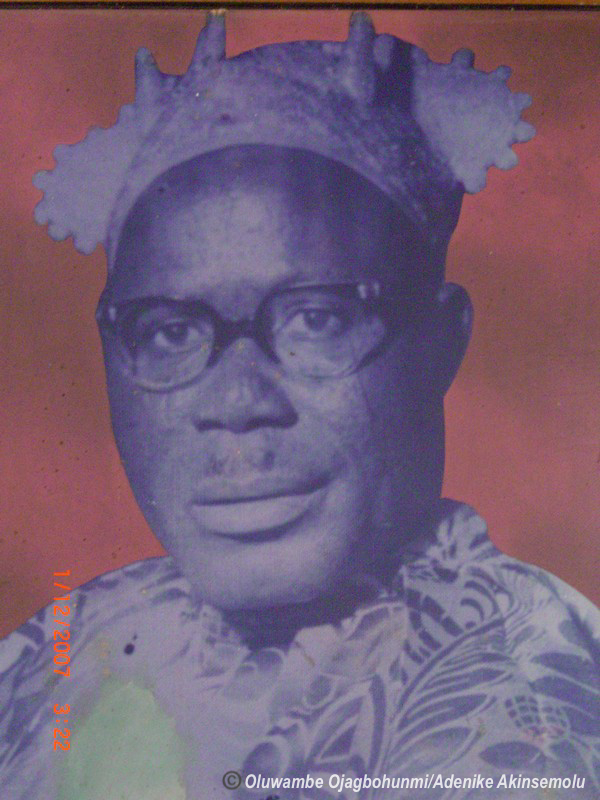
In 1950, only three years after the founding of Aiyetoro, the Apostles gathered in their white garments to hear the words of their leader, Oba Ethiopia O. Peter, the first Ogeloyinbo. The occasion was one of both solemnity and hope, as the young community sought guidance in shaping the principles that would sustain the “Happy City.” The memory of those early addresses, preserved in photographs and oral testimony, remains central to Aiyetoro’s story.
The Apostles assembled in the community hall, a simple wooden structure raised above the marshland, or sometimes in open spaces along the shore. Rows of men and women sat shoulder to shoulder, their white garments glowing against the backdrop of the sea. At the centre stood Oba Ethiopia O. Peter, staff of authority in hand, his voice steady, his presence commanding yet humble. For the people of Aiyetoro, his words were not simply advice but spiritual direction, binding them together as a covenant people.
Archival photographs capture the moment: the Ogeloyinbo, robed in white, gesturing with quiet authority as Apostles lean forward in attentive silence. Oral accounts describe how he began with hymns and prayers, reminding the community that worship was the foundation of their life. Then he spoke of discipline, honesty, and equality — principles that would distinguish Aiyetoro from the world around them.
His message in 1950 was especially important because the community was still fragile. The settlers had built homes on stilts, dug canals, and laid walkways, but they faced external scepticism and internal challenges. Some questioned whether such a communal experiment could last. Oba Ethiopia O. Peter’s address sought to steady the people with faith. He reminded them that they were not merely building a town but living a vision: a place where work was shared, disputes were resolved in peace, and wealth belonged not to individuals but to the collective.
Witnesses recall that his words carried both warning and encouragement. He urged the Apostles to resist the temptations of selfishness and to remain faithful to their covenant. Yet he also spoke of promise: that if they remained united, Ayetoro would become a light to the world, admired for its discipline and harmony. His speech ended with prayers, and as the congregation broke into hymns, many felt renewed strength to continue their labour.
To outsiders who later visited, the image of a spiritual leader addressing his people in white robes became one of the defining impressions of Ayetoro. It seemed at once ancient and modern — ancient in its echoes of biblical assemblies, modern in its bold attempt to live differently within colonial Nigeria.
Today, as erosion threatens the physical landscape, the memory of that 1950 address endures as part of Ayetoro’s heritage. It was more than a speech; it was a declaration of identity and purpose. As one elder reflected: “When Oba Ethiopia spoke, it was as if God himself reminded us why we came to this place.”


