At the edge of the Atlantic, where waves lap gently against the sandy shore, the people of Ayetoro gathered to witness one of their most profound rituals: baptism. In the 1950s, these ceremonies were not simply private moments of faith but great communal occasions. Dressed in spotless white garments, men, women, and children lined the shoreline, their hymns blending with the rhythm of the sea. The waters of Ayetoro became the font of renewal, where old lives were left behind, and new ones began.
From the earliest days of the Holy Apostles’ Community, baptism held a special significance. The founders believed that the sea itself was a sacred witness — vast, eternal, and cleansing. To step into its waves was to enter into covenant with both God and community. Candidates for baptism prepared through prayer and fasting, while families readied themselves to support them in the new life they would embrace.
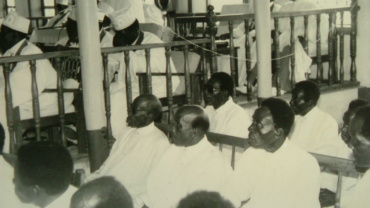
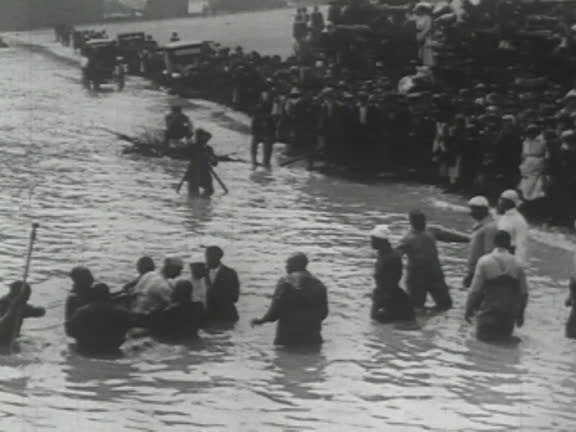
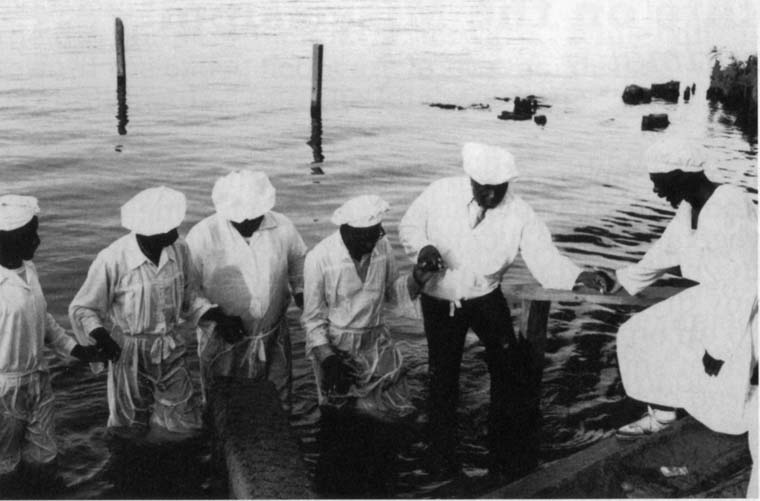
Archival photographs recall the beauty of these ceremonies. A group of worshippers stand ankle-deep in the surf, their garments clinging to their bodies as elders lift their hands in blessing. The Ogeloyinbo, staff in hand, leads prayers while the congregation sings in unison from the shore. As each candidate is lowered into the water, the crowd erupts in song: voices rising, drums marking rhythm, and children clapping joyfully. The ocean, shimmering under sunlight, reflects the white robes and the faith they symbolised.
For the Apostles, baptism was more than a ritual. It was a public declaration of belonging. The person who entered the water did not emerge alone; they became part of Ayetoro’s spiritual family, bound by the same vows of honesty, equality, and service. One elder later reflected: “The sea washed away more than sin. It washed us into one people.”
The choice of the shoreline also carried deep meaning. Water was central to Ayetoro’s life — for fishing, for travel, for trade. By baptising at the water’s edge, the Apostles acknowledged that their spiritual lives were inseparable from the environment around them. The ocean was not only livelihood but also holy ground, reminding the community of their dependence on both creation and Creator.
Visitors who witnessed these ceremonies in the 1950s were often struck by their power. Journalists wrote of hundreds gathered in white, the sound of hymns carrying far across the lagoon. Missionaries observed that the ceremony blended Christian tradition with local rhythm and symbolism, creating something at once universal and distinctly Ayetoro.
How strong is your museum’s website as part of the whole offer? Does it reflect your identity as an Today, while much of the shoreline has been claimed by erosion, the memory of those baptisms remains vivid in oral histories. Elders still speak of the waves crashing softly as prayers rose, of the joy that filled the air as new members stepped forward, and of the unity that followed every immersion. The baptisms were more than ceremonies; they were milestones in the life of the community, moments when faith, family, and the sea itself bore witness.
In Ayetoro, to be baptised at the water’s edge was to be woven into the fabric of the Happy City — a fabric made of faith, fellowship, and the eternal embrace of the sea.